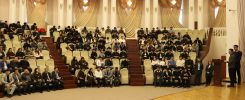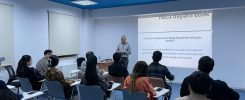
The III International Scientific-Practical Conference titled “Mechanical Engineering and Energy: New Concepts and Technologies” was organized by Azerbaijan Technical University (AzTU) in collaboration with Brandenburg University of Technology Cottbus-Senftenberg (BTU GS, Germany), Gazi University (Turkey), and the NESEFF International Network on Energy Supply and Efficiency (Germany). The conference was held in honor of the 75th anniversary of AzTU.
The main aim of the conference was to emphasize the importance of environmental sustainability in science, education, and research, enhance the economic efficiency of infrastructure, and promote new approaches that foster scientific and technological innovations in mechanical engineering and energy sectors.
Welcoming the participants, AzTU Rector Vilayet Valiyev noted that a total of 100 papers were submitted to the conference. He highlighted that 268 scientists and researchers from 41 institutions across 13 countries are participating, and expressed confidence that the event would serve as a reliable platform for collaboration between academics and industry, while strengthening international cooperation in science and technology.
Joining online, Professor Silvio Simon, Vice-Dean of the Faculty of Mechanical, Electrical, and Energy Systems at BTU GS and Chair of NESEFF, extended his best wishes to the participants.
Professor Muhammad Ishtiaq Ali from the Research, Innovation, and Commercialization Office at Quaid-i-Azam University, Pakistan, delivered a presentation on “From Education to Action: Educating and Training the Next Generation of Climate-Sensitive Leaders to Protect the Environment.”
Subsequently, a joint presentation by BTU GS and AzTU researchers was shared online with conference participants, proposing solutions to real-world engineering and energy challenges.
The two-day conference, featuring sectional sessions, focused on:
- analyzing the development prospects of mechanical engineering and energy sectors,
- discussing innovative scientific and industrial approaches,
- exploring applications of modern technologies,
- identifying economically efficient production models,
- fostering the growth of small and medium enterprises in the production sector,
- strengthening collaboration between universities and industry, and
- facilitating networking among leading scientists and industry leaders.